
Tapestries
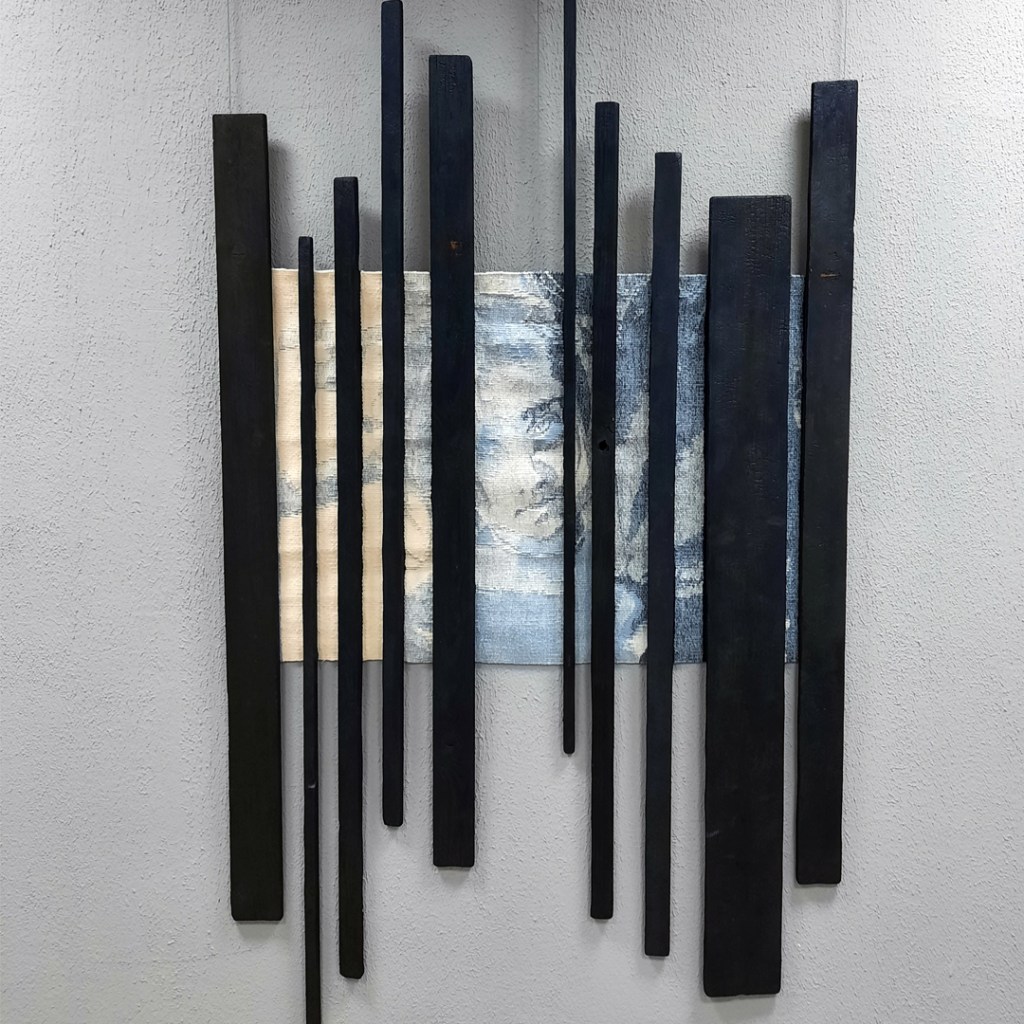
“Stolen Childhood”
The main question behind this tapestry is:
What happens to children who suffered physical or emotional trauma in their childhood?
The tapestry is hanging behind burned wood boards. The parts of the woven piece you can see are only woven in 4 colors of woolen threads – natural, light blue and two different shades of grey. I took wool because it is a very soft and light material. It reminds me on cosyness, warmth, security and protection … everything a small child should have.
The burned wood is the contrast to this. It represents destruction and the border between of a helpful hand and the forlornness.
2018/21
woven tapestry
cotton, wool, burned wood
81 x 60cm
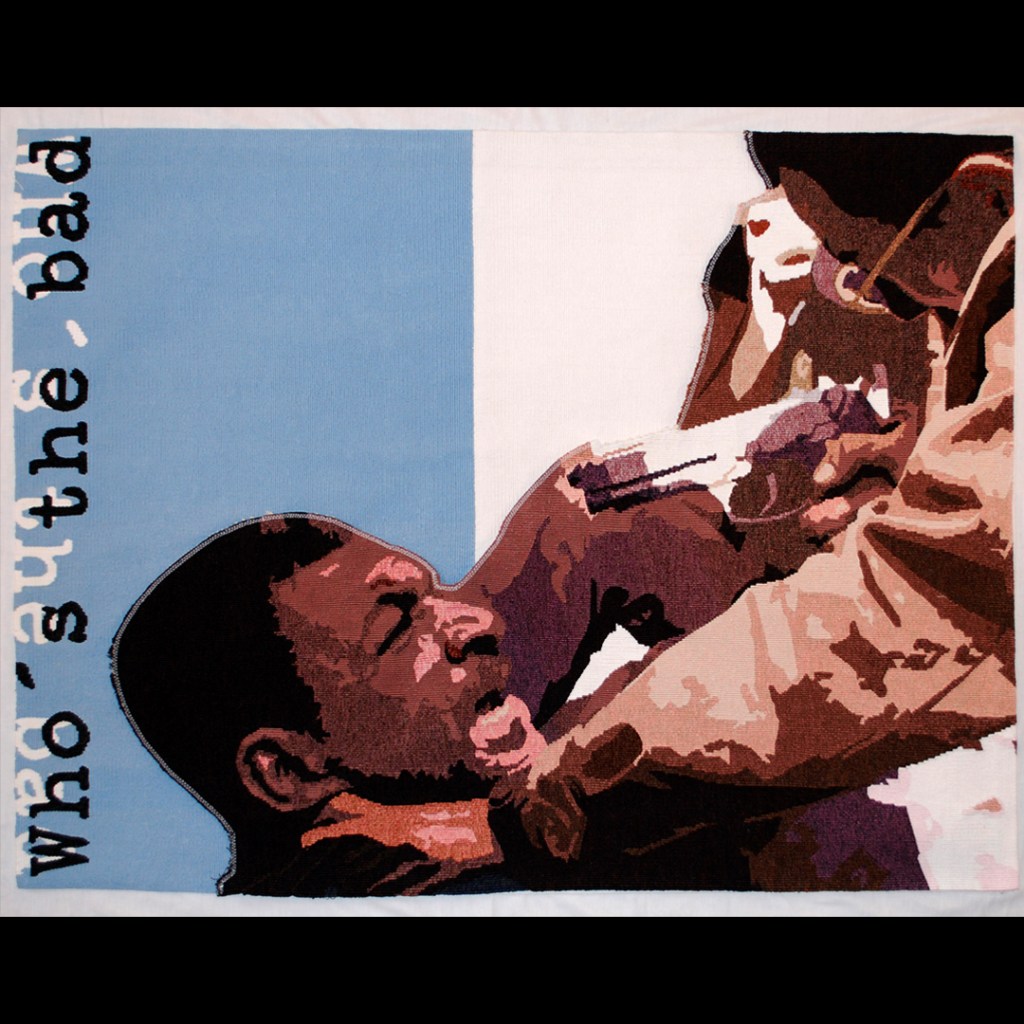
“Who´s the bad”
The tapestry consists of 2 parts. The group of figures is woven and applied separately.
The scene comes from an internet report about the Iraq war. Due to the enormous speed of sending images all over the world, the background information often falls by the wayside. This makes it more difficult for the viewer to categorize them, and it is almost impossible to assign them to a larger context. There remain questions and irritations and thus uncertainty.
2008/09
woven tapestry
cotton
90 x 115cm
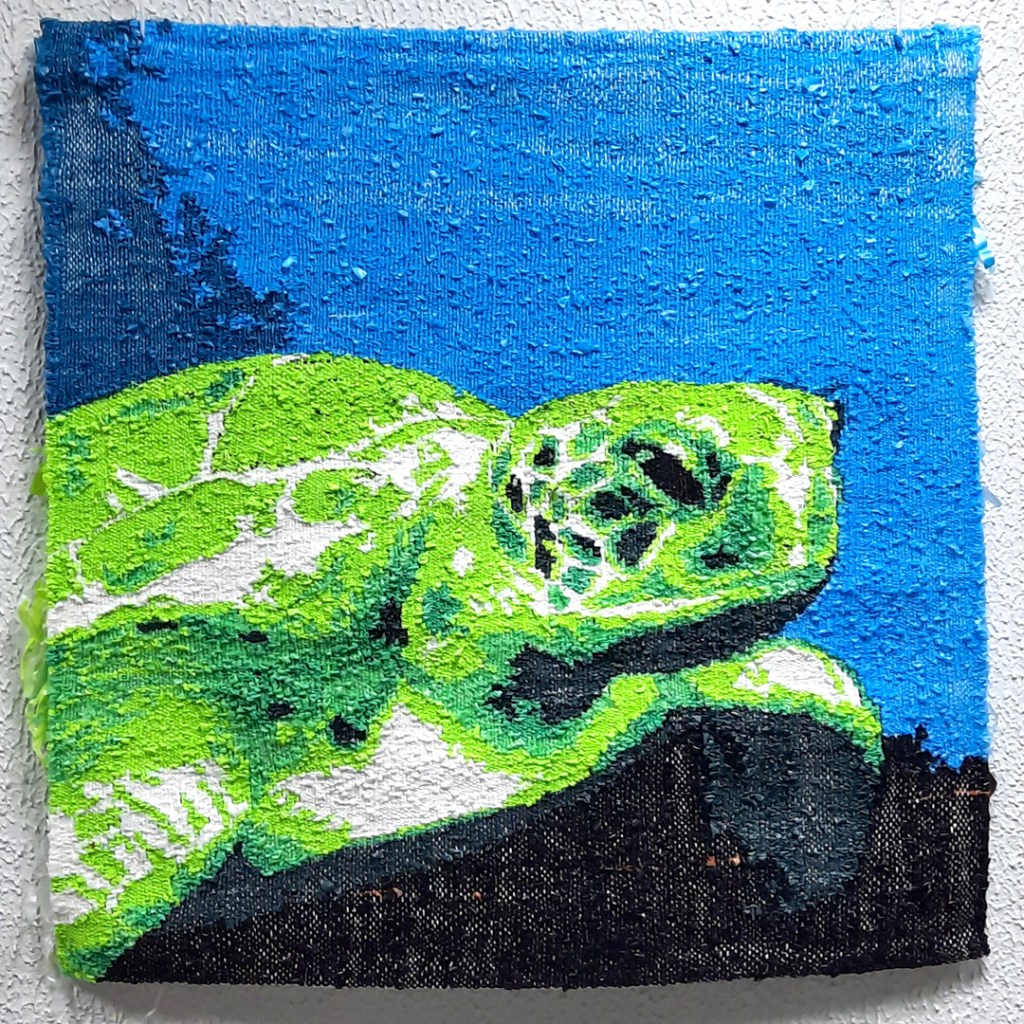
“The Beauty of the Sea”
“The Beauty of the Sea” deals about the question of the sea pollution. We know the pictures of dying turtles which swallowed plastic bags. This is the reason why this work is woven in cutted plastic bags. Death and Life is getting near in this art piece. In the first moment it looks beautiful, but it is telling another story.
2021
woven tapestry
cotton, plasticbags
80 x 80cm
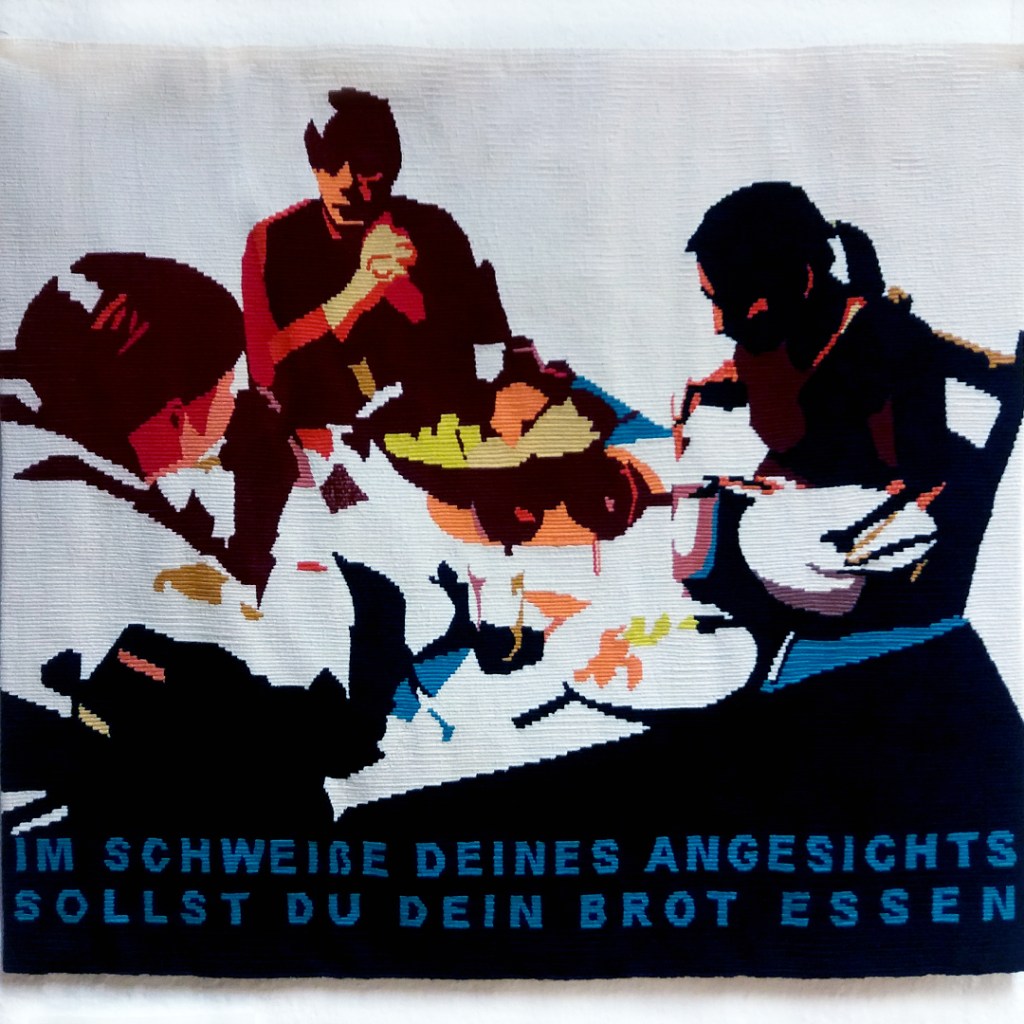
“Im Schweiße deines Angesichts …”
The old art of tapestry weaving and the modern formal language of poster art were combined in the work „In the sweat of your face“. The scenery was created from a photo series, which shows the preparation, the communal meal and the follow-up of a 3-course menu for 6 people. The biblical quote “You shall eat your bread in the sweat of your brow” indicates that hard work comes first, followed by muse. The visual reduction to the food scene was retained, as the text already indicates the preparation and follow-up.
2007
woven tapestry
cotton
65 x 58cm
“My Apron”
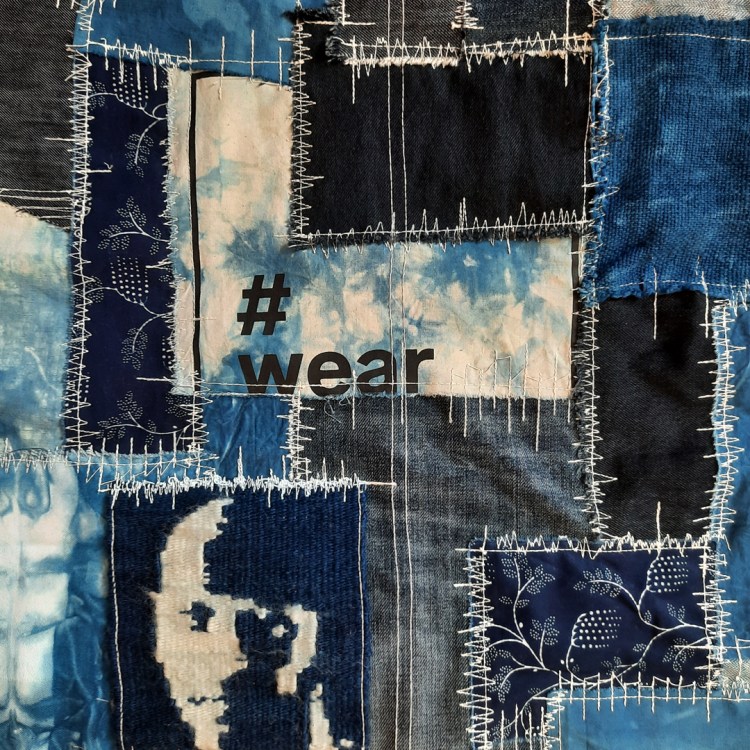
The work was created at the request of my colleague Karin Altmann. For her research project, she wanted everyone involved with indigo dyeing in Austria. Each apron represents one person. The collection was shown for the first time at the „„Wanderlust. Sharing of things resonante “ exhibition during the University of Applied Arts Vienna Festival at the end of June 2022.
The apron represents my doings in the fields of dyeing, weaving and sewing. It is my first work where all three focal points of my artistic work came together on an equal footing.
2021
dyed – woven – sewn
linen, cotton, wool, jute
Weavings
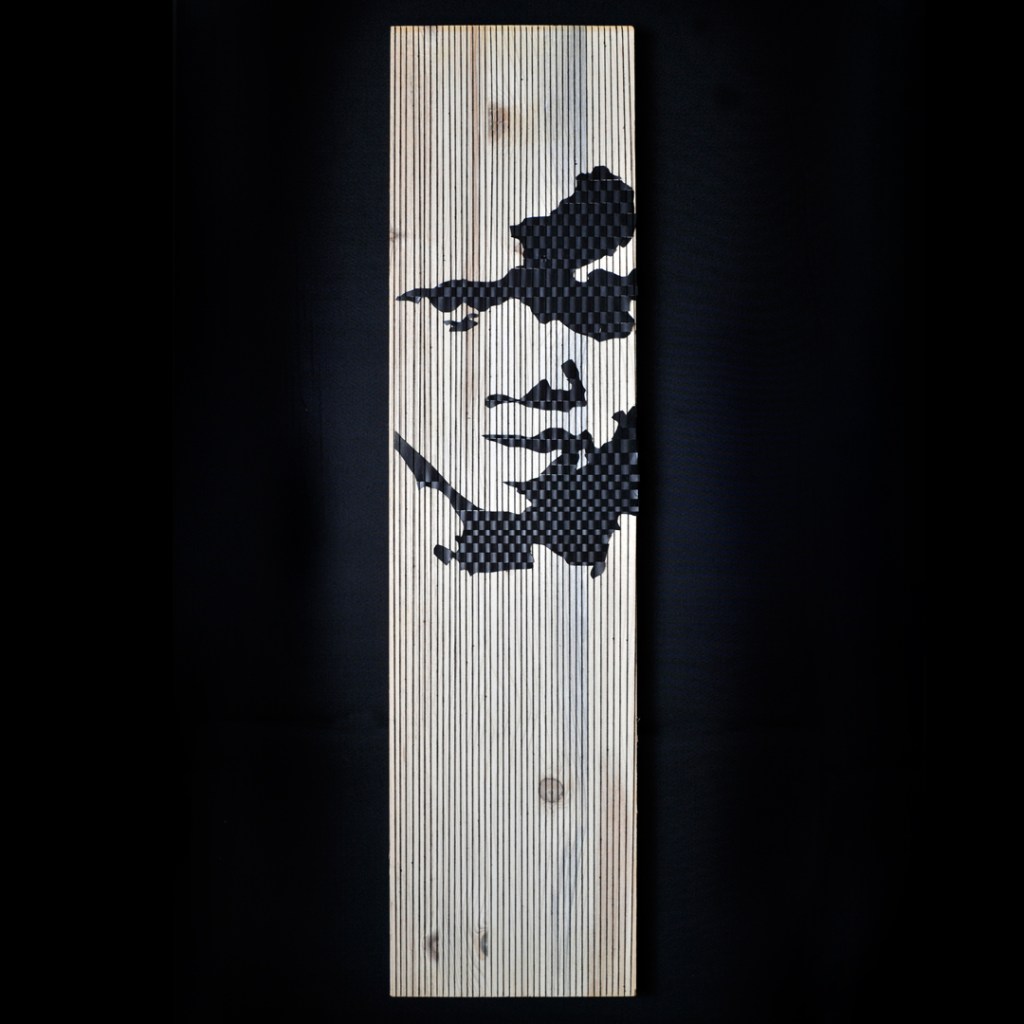
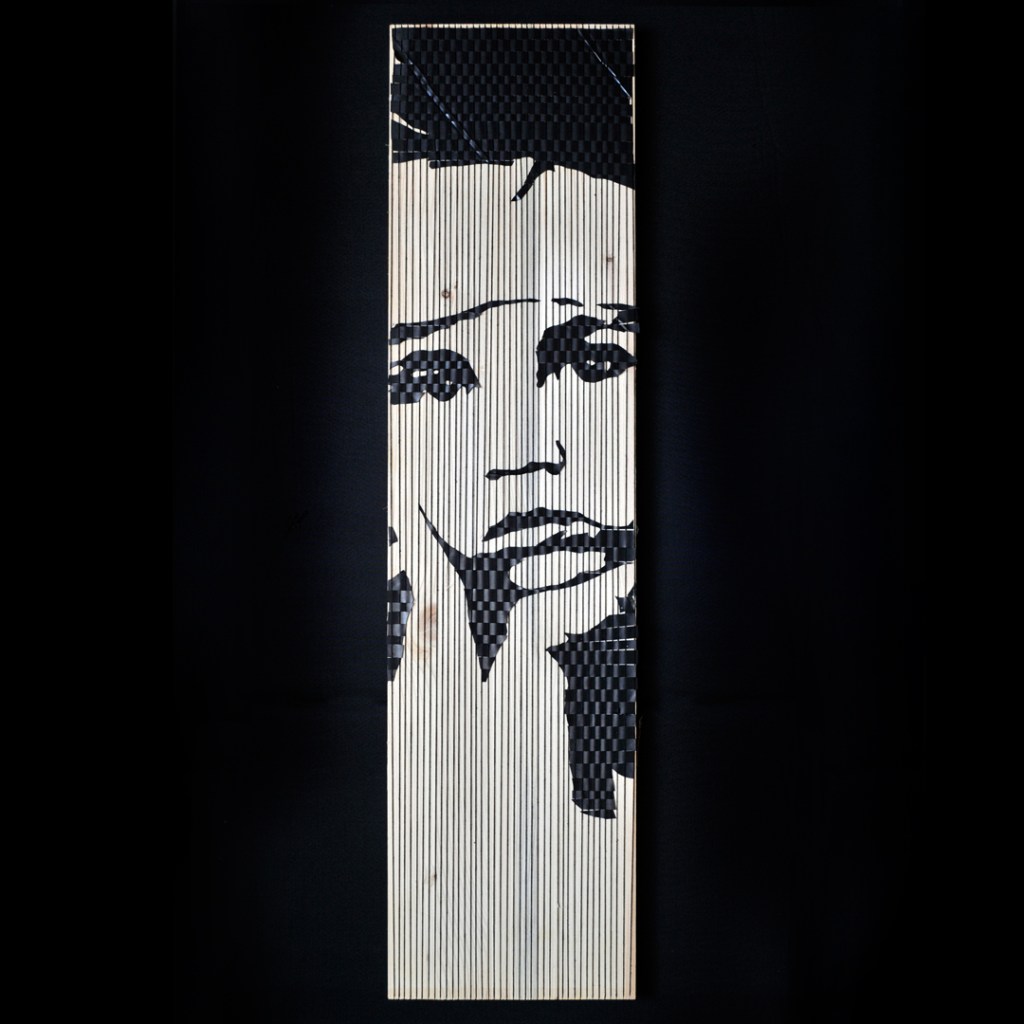
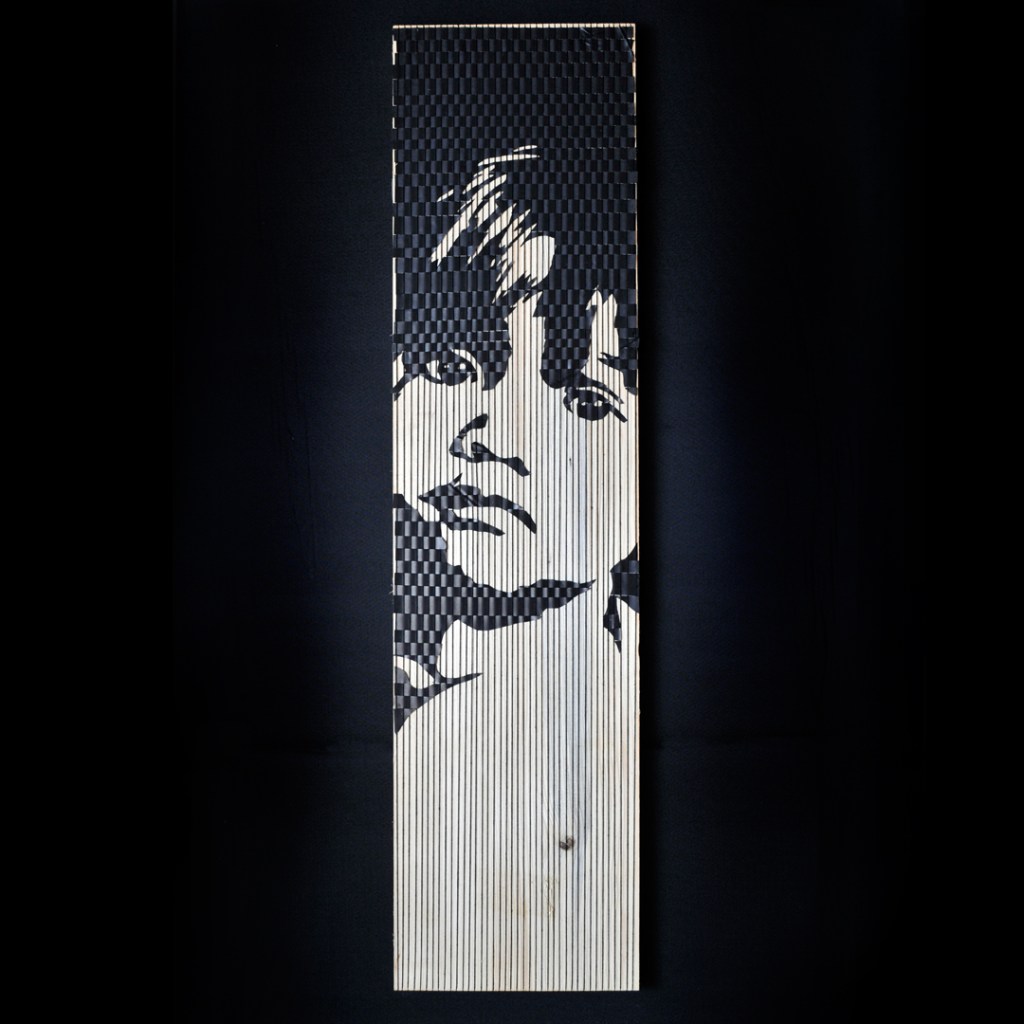
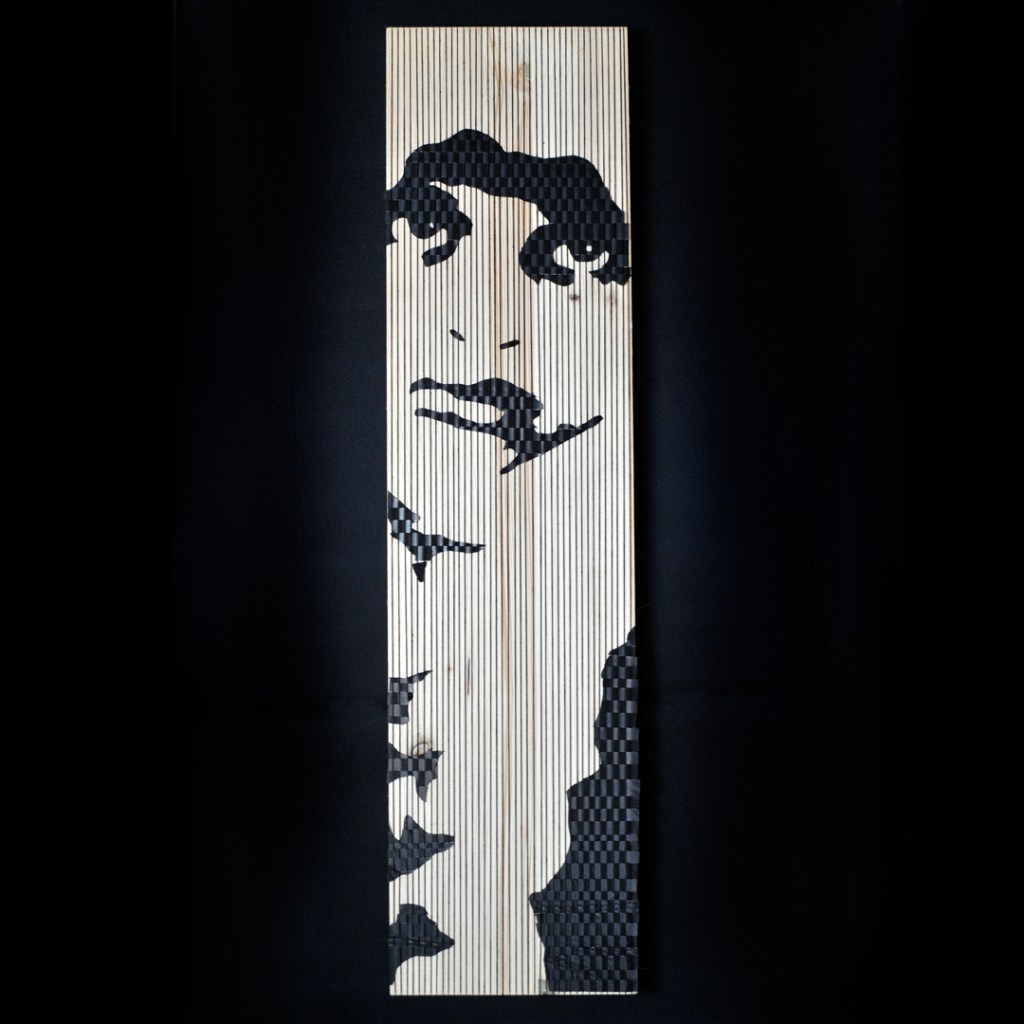
“Individualverlust /
Individual loss”
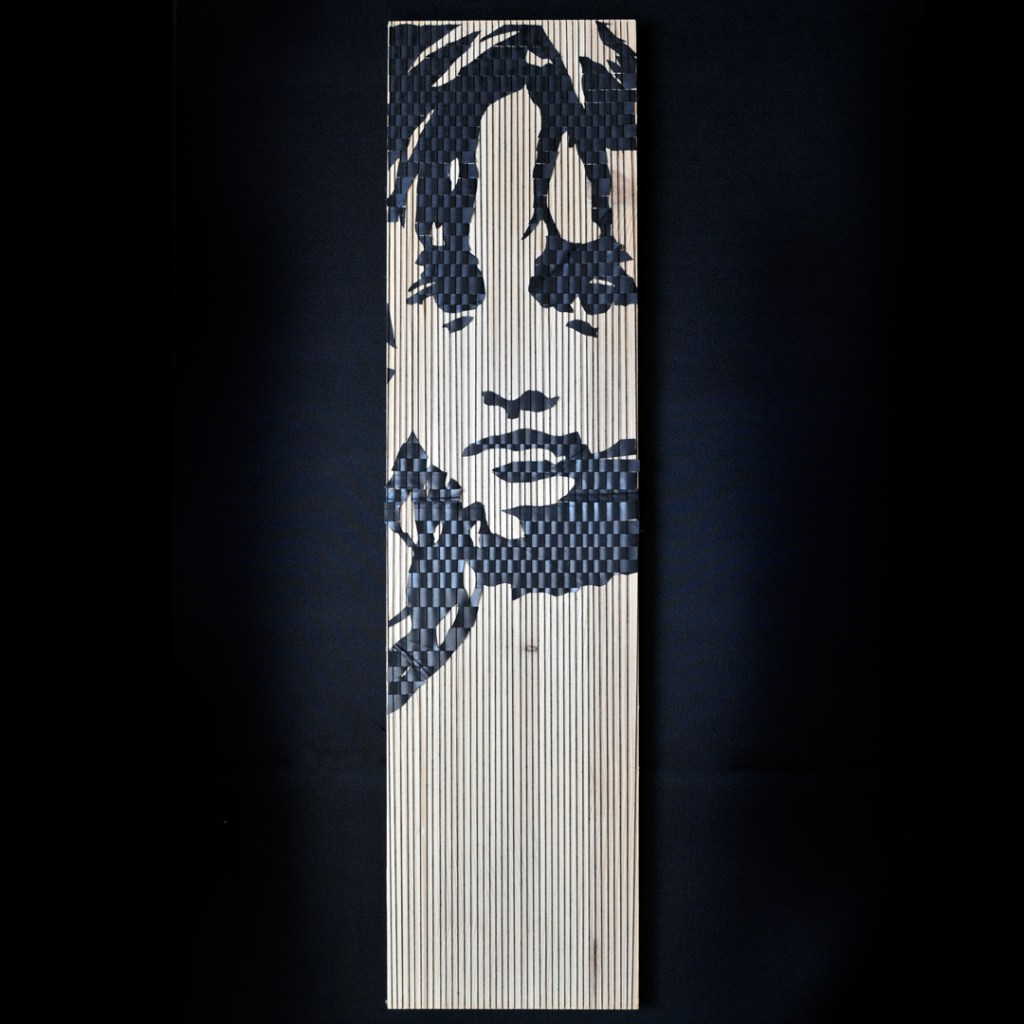
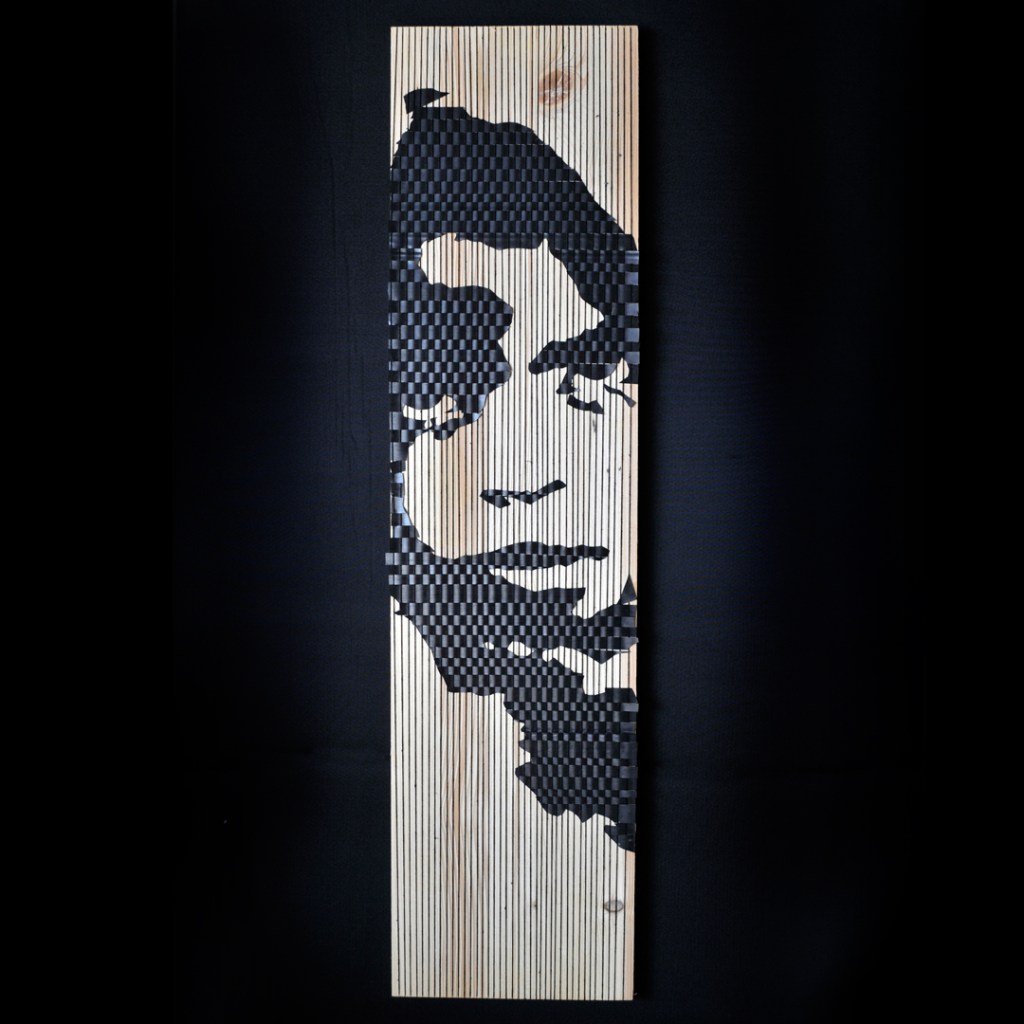
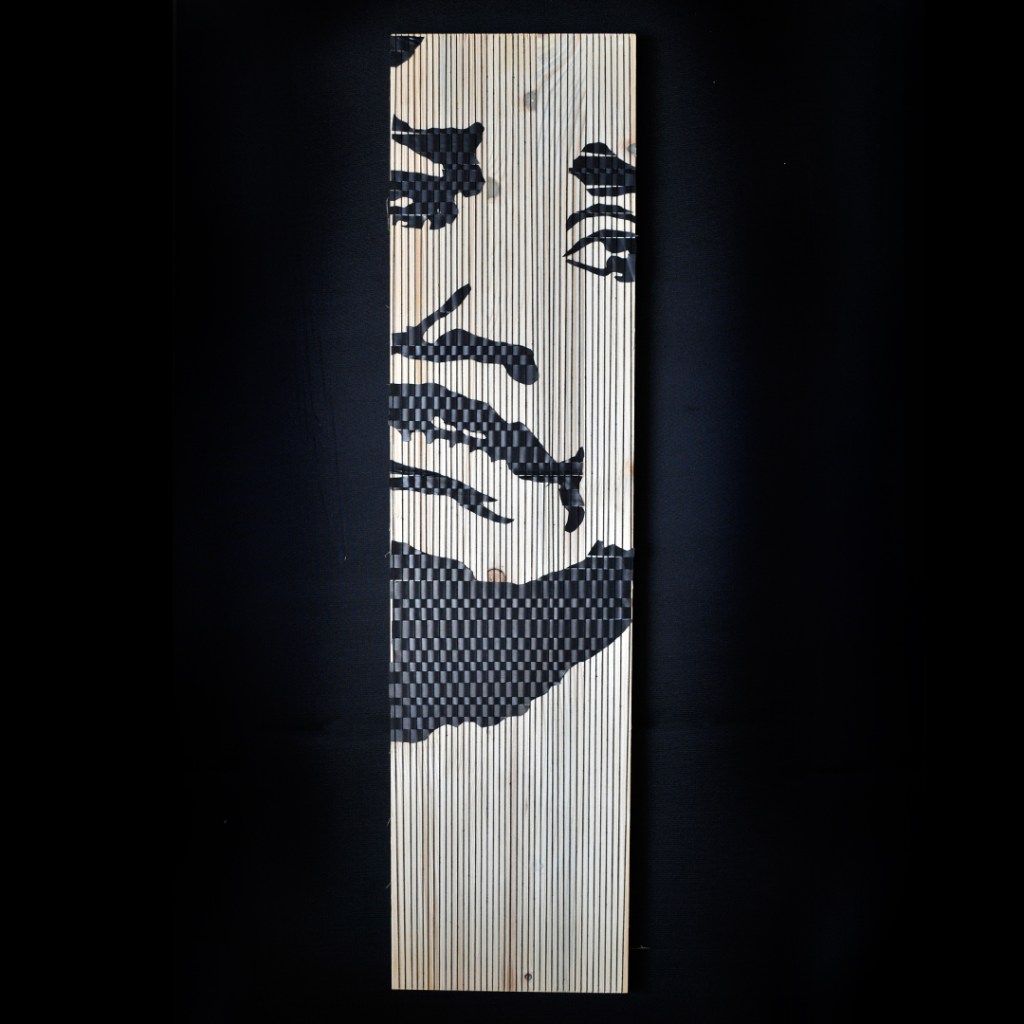
Conflict and poverty regions of the world only become aware of an emotional singular event. It is often the fate of children that is widely reported in the media. Images thus become metaphors or variables for a situation that we cannot understand. Due to this extreme charge of emotion, the fate of the individual recedes into the background over time and so the depicted person, in this case the children’s portraits, loses their own individual story. A synonym for a major event is created.
The wood grain, which is always unique in the world, represents the individuality of the child. This individuality is superimposed by the PVC fabric in the form of a silhouette.
2016
woven
cotton, PVC, wood
7 woven pieces each 20x80cm
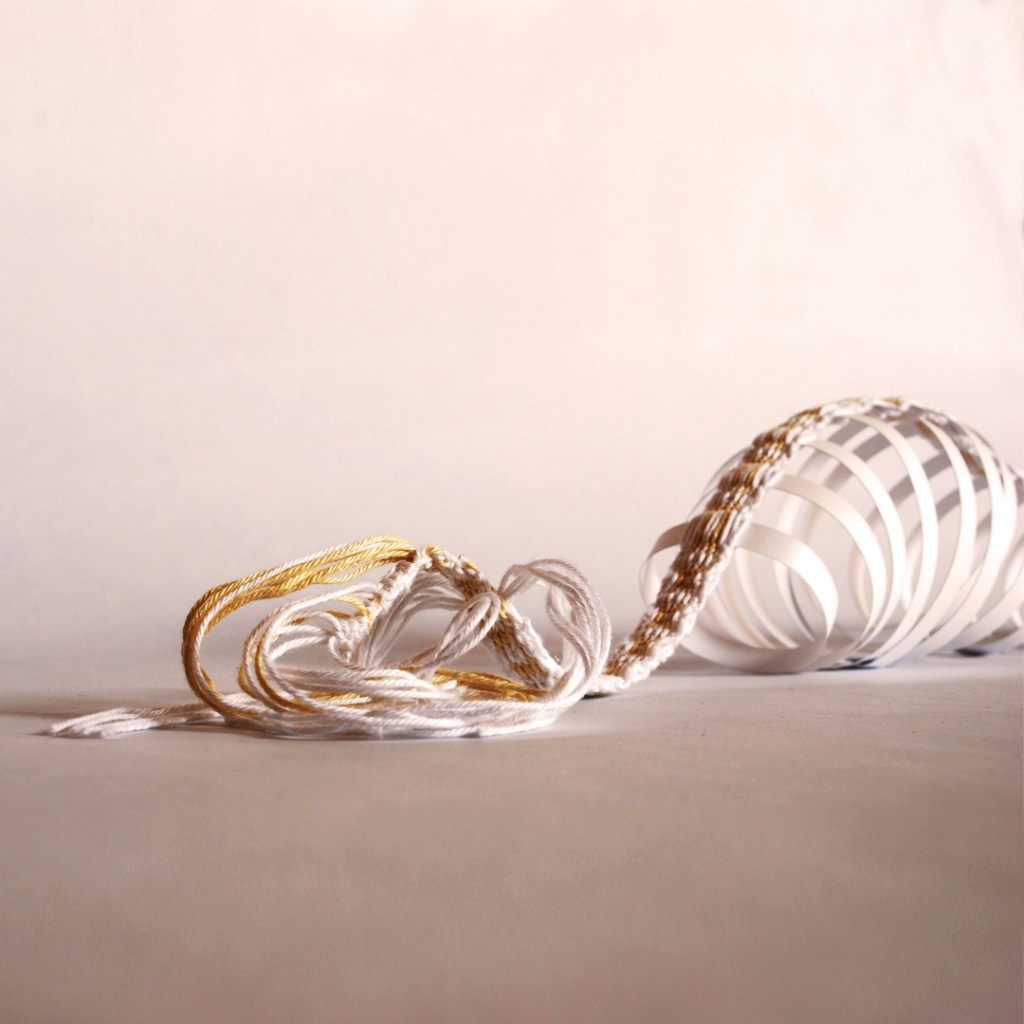
“Relictum #1”
The ancient technique of tablet- or card weaving is shown in an artifact. It looks like the skeleton of a rare animal – like a dragon or a dinosaur. Nobody knows for sure. The technique of card weaving itself is also a rare technique for making textiles. A lot of people used to do this because ribbons and tapes were essential for many things and activities. Nowadays you can only find it in museums or at medieval festivals. But in some regions of the world it still exist.
2009
cardwoven
cotton, paper
12x12x55cm
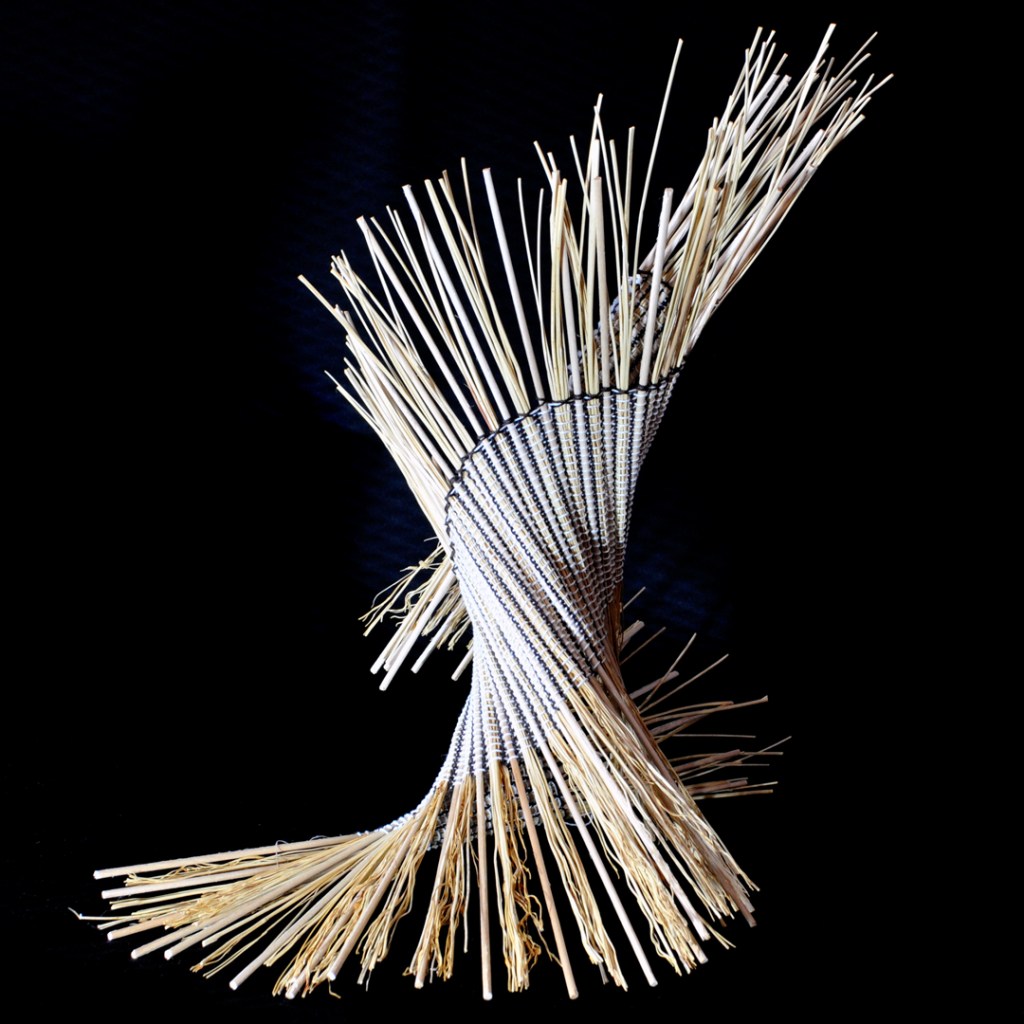
“Sculptur Nr. 01”
Coming out of a two dimensional technique into a three dimensional object.
Changing one material, in this case the weft, and you can get completely new possibilities.
2016
woven
cotton, gras, wood
35x35x25cm
 KAPUJeans